Lesson Plan: People Who Make Significant Change in History
Grade Level: Grade 2
Subject: Social Studies
Duration: 50 minutes
1. Learning Objectives
By the end of this lesson, students will be able to:
- Generate “who”, “what”, “when”, “where”, and “why” questions about individuals (e.g., Rosa Parks) and groups (e.g., Civil Rights Movement) who contributed to ending segregation.
- Use newly learned vocabulary to explain the importance of their questions.
- Collaborate with peers to refine and present questions.
2. Standards Alignment
- CCSS.ELA-LITERACY.SL.2.1: Participate in collaborative conversations with diverse partners about grade 2 topics.
- CCSS.ELA-LITERACY.W.2.7: Participate in shared research and writing projects (e.g., generate questions to gather information).
3. Required Materials & Resources
- Picture book or short story about Rosa Parks (age-appropriate)
- Projector or chart paper and markers
- Vocabulary cards (see worksheet)
- Question stem handouts (who, what, when, where, why)
- Individual whiteboards or paper and pencils
- Exit ticket slips
4. Lesson Timeline & Activities
| Phase | Duration | Core Activity / Focus | Primary Student Activity |
| 1. Warm-Up & Hook | 5 min | Visual Comparison & Brainstorming | Observe contrasting bus photos, discuss differences, and generate initial questions |
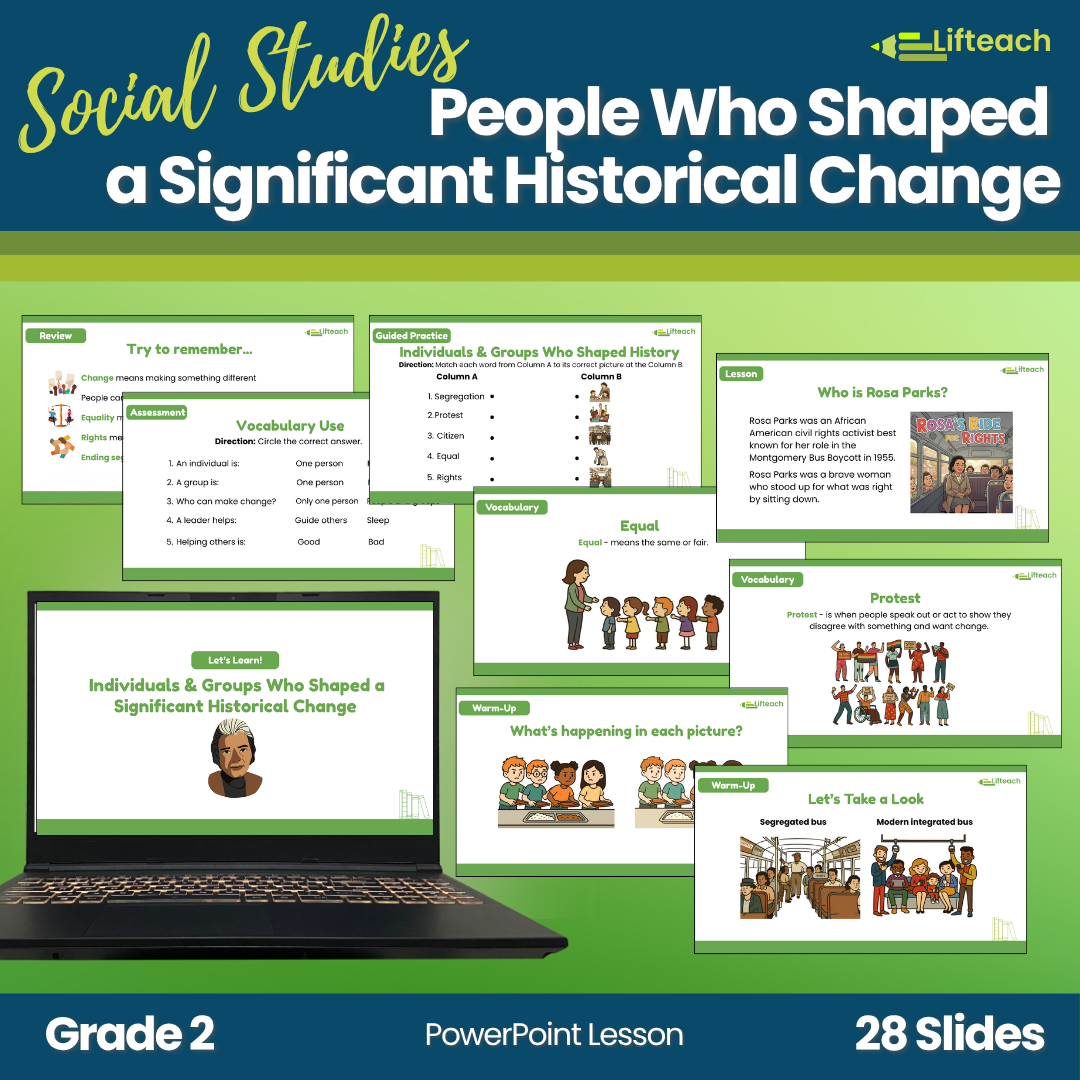
| 2. Vocabulary Instruction | 7 min | Key Term Introduction | Learn 5 key terms (Segregation, Protest, Citizen, Equal, Rights) and illustrate mini sketches on index cards |
| 3. Lesson Proper | 10 min | Interactive Reading & Discussion | Listen to Rosa Parks story/video, answer guided prompt questions, and share insights |
| 4. Guided Practice | 10 min | Structured Question Generation | Work in pairs using question stems to compose questions using target vocabulary |
| 5. Independent Practice | 8 min | Formative Whiteboard Check | Draft an original question about Rosa Parks or the bus protest on whiteboards for individual review |
| 6. Class Review | 5 min | Peer Feedback & Discussion | Share generated questions aloud and give peer feedback using thumbs up/down |
| 7. Reflection & Exit Ticket | 5 min | Final Synthesis & Check | Complete exit ticket with a remaining question and draw a predicted answer sketch |
5. Assessment Methods
- Observation of pair work discussions and use of vocabulary.
- Review of the Question Quiz (independent practice) for clarity, relevance, and correct question form.
- Analysis of exit ticket responses to gauge lingering questions and understanding.
6. Differentiation Strategies
- For Struggling Learners / ELLs: Provide sentence frames (e.g., “Who is _____?”, “Why did _____?”). Pair with a stronger reader or use picture cues.
- For Advanced Learners: Challenge to research another individual or group (e.g., Martin Luther King Jr.) and generate additional questions. Encourage use of multiple vocabulary words in one question.
- For Students with IEPs: Allow additional processing time and one on one check-ins. Offer choices: write question, illustrate, or verbalize to an adult.
7. Worksheets & Handouts
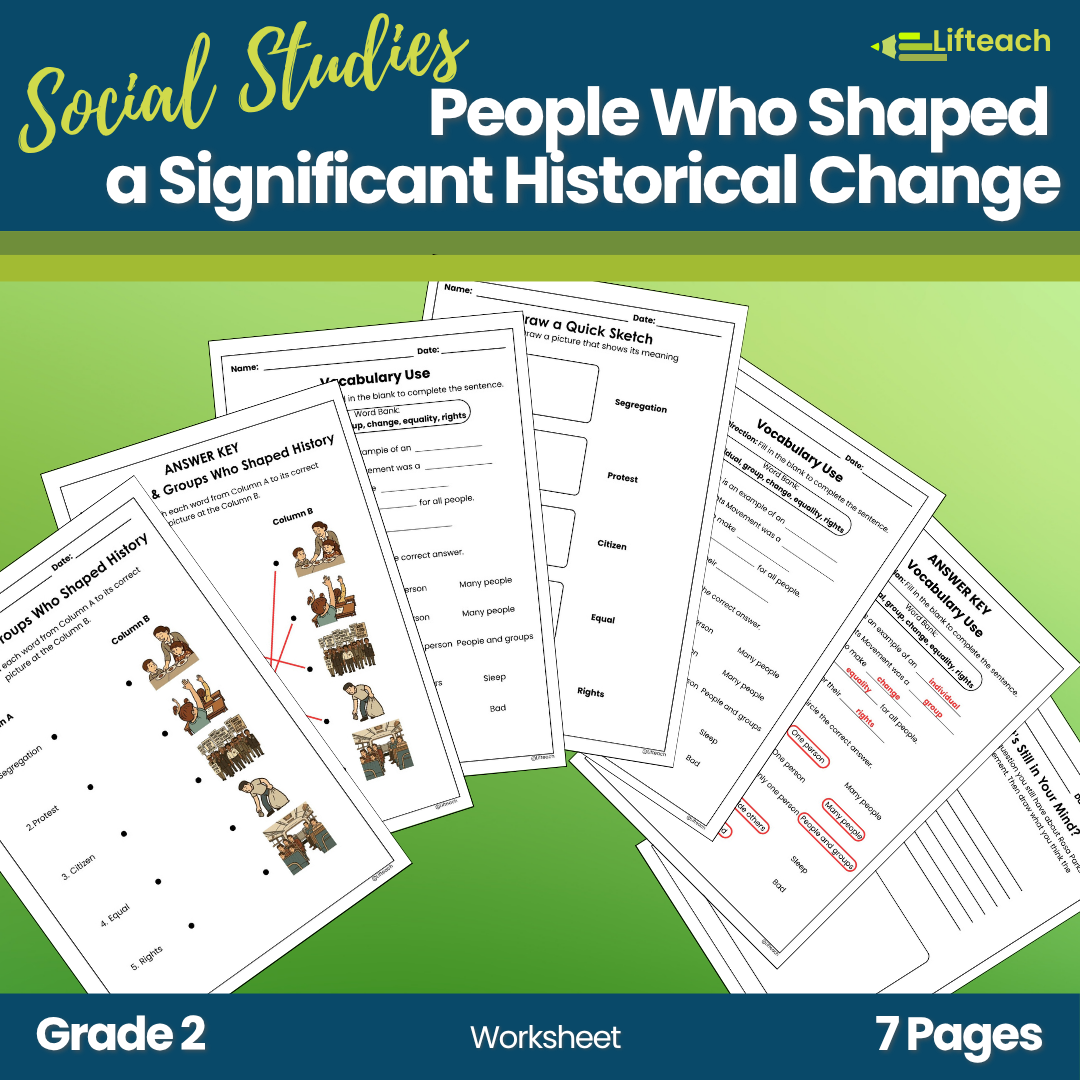
- Vocabulary Worksheet – Match each word (segregation, protest, citizen, equal, rights) with its picture. – Draw your own picture for one word and write a sentence.
- Question Stem Handout – Who? / What? / When? / Where? / Why? – Space to write one question under each stem.
- Exit Ticket Slip – My question: ________. – My guess for the answer: (draw or write).
Introduction Video
PowerPoint Lesson